
About us
origin unfiltered
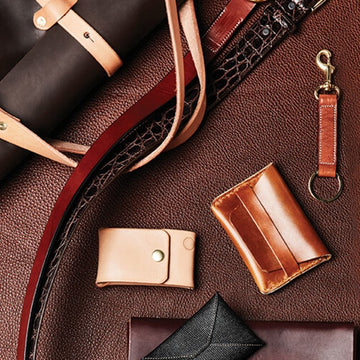
Camelide started small, moving leather from workshops across the subcontinent toward buyers in the Gulf, then found its way home to India. A camel crosses harder ground than most animals ever will. That toughness gave the brand its name and its standard. Hides get checked one at a time. Hands shape what machines finish. Nothing rushed, nothing skipped. That's the whole method, still.
final boss check
A finished piece leaves the workshop only after someone runs a hand across every seam. Stitching gets pulled and tested, not just glanced at. Edges get checked for smoothness under a thumb. Color gets matched against the batch it came from. Only then does packaging happen. Nothing ships on a schedule. It ships when it's actually ready, and that's the only deadline that matters here.
got questions?we are listening!
We value our customers and their feedback. Share with us your experience by sending a picture or video of yourself using our product you bought from us.
We're always looking forward to reading your reviews and suggestions. Let's make it happen!
know your LEATHER
Leather often regarded as the essence of quality and durability since the medieval ages, has become the most common primal matter for producing exquisite products. To throw some light on differentiating leather according to its quality.
We can see that it can be classified in the following four categories
We can see that it can be classified in the following four categories
TOP GRAIN
Top grain ranks just below full grain, and the difference comes down to one step. The outer split layer gets separated away, leaving a thinner, more pliable hide behind. That flexibility makes it the material of choice across most high-end leather goods. Less rugged than full grain, still built to last. Most premium bags and wallets on the market are working with top grain, whether the label says so or not.
CORRECTED GRAIN
Corrected grain starts with a hide that has flaws worth hiding. An artificial grain gets applied over the natural surface, and solid pigment covers whatever imperfections were underneath. The result looks uniform, almost too uniform. It's the leather behind most pigmented goods on the market. Cheaper to produce, easier to color match, but the character of the original hide gets buried under the correction.
SPLIT LEATHER
Split leather comes from what's left over. Once the top grain gets separated away from a hide, the fibrous layer underneath remains, and that becomes split. Thinner, less durable, priced accordingly. It shows up mostly in budget belts and everyday accessories where cost matters more than longevity. Not the material Camelide reaches for first, but honest about what it is and where it belongs..
Care Isn't Complicated
Keep it dry. Keep it out of direct sun. Wipe it, don't wash it. Leather rewards patience and punishes shortcuts, and a little attention now saves the piece for years later.A damp cloth handles most situations. Never a washing machine, never a radiator, never direct heat of any kind. If it gets wet, just let it air dry on its own. Left alone in a cool, dry spot, a good piece keeps softening with age instead of falling apart.
store it right
Stuff bags and wallets lightly with paper to hold their shape. Hang belts instead of folding them to avoid creases that set in over time. Keep leather away from rough fabrics or sharp edges that can scratch the surface, and skip plastic bags, leather needs to breathe. A cool, dry shelf beats a damp closet every time.
signs it's working
The leather stops feeling stiff and starts moving with you instead of against you. Color deepens slightly, texture smooths out, and the piece starts to look like it belongs to you specifically. That's not wear. That's the leather doing exactly what it's supposed to do.
the promise in the leather
Handmade, Not Identical-
Every product is handmade, so no two pieces will be exactly the same. Hides carry natural variation in grain, color, and texture, treated to give that antique, worn-in look from the start. That's not inconsistency, that's the material being honest about where it came from.
Built for Years, Not Seasons
Expect years of daily use out of a single piece. Customers have worn the same belt for four years and counting, and it's still holding up.
OUR SOCIAL FABRIC
THE WORLD WORKS BETTER WHEN WE WORK TOGETHER
As a leading global house of modern luxury brands, we strive to surprise and delight our customers. When producing our products, we seek to do so in a way that respects and values our people, our planet, and the communities in which we live and work. We want you to love our products, not only because they fit your lifestyle, but because they fit your values as well.
OUR BRAND PERSONALITY
The Hands Behind It
Every belt passes through real hands before it reaches a shelf, and those hands belong to people who've spent years learning what leather actually needs. Cutting takes precision. Stitching takes patience. A single strap might pass through five or six sets of hands before it's finished, each one checking for something the last person might have missed. This work doesn't move fast, and nobody's asking it to. Camelide exists because of the people who show up daily and treat leather like it deserves the effort.
The Real Talk
Handmade > mass-produced. Every time.